Online Business Systems Consulting + Implementation Management
Your website, booking, CRM, and follow-up should work like one system. Plan and manage how your website, booking, CRM, and follow-up systems work together so leads and client information do not get lost.

What Becomes Clear First?
The first useful result is a shared understanding of the problem, the desired outcome, and the smallest responsible next step.
Problem
A map of the current website, booking, CRM, and follow-up path.
Priority
A clear list of missing connections, duplicate steps, and ownership gaps.
Roadmap
A Roadmap for forms, calendars, fields, tags, workflows, and reporting.
Ownership
Managed implementation with test cases and review points.
The Problem Is Not Another Missing Tool
My current system is officially failing. I missed a callback yesterday that probably cost me a $2,000 job.
The visible problem: I need my website, booking, CRM, and follow-up to work together.
Calls, forms, calendars, emails, texts, payments, and client details often live in different places. When the connections and ownership are unclear, people repeat work, miss follow-up, and cannot see what is working or what is stuck.
When the work stays unframed, it becomes harder to tell what matters, who owns it, what is complete, and what should happen next. The goal is one visible path for leads and client information.
What This Service May Include
The exact work is confirmed in writing. These are the four main functions the Roadmap may include.
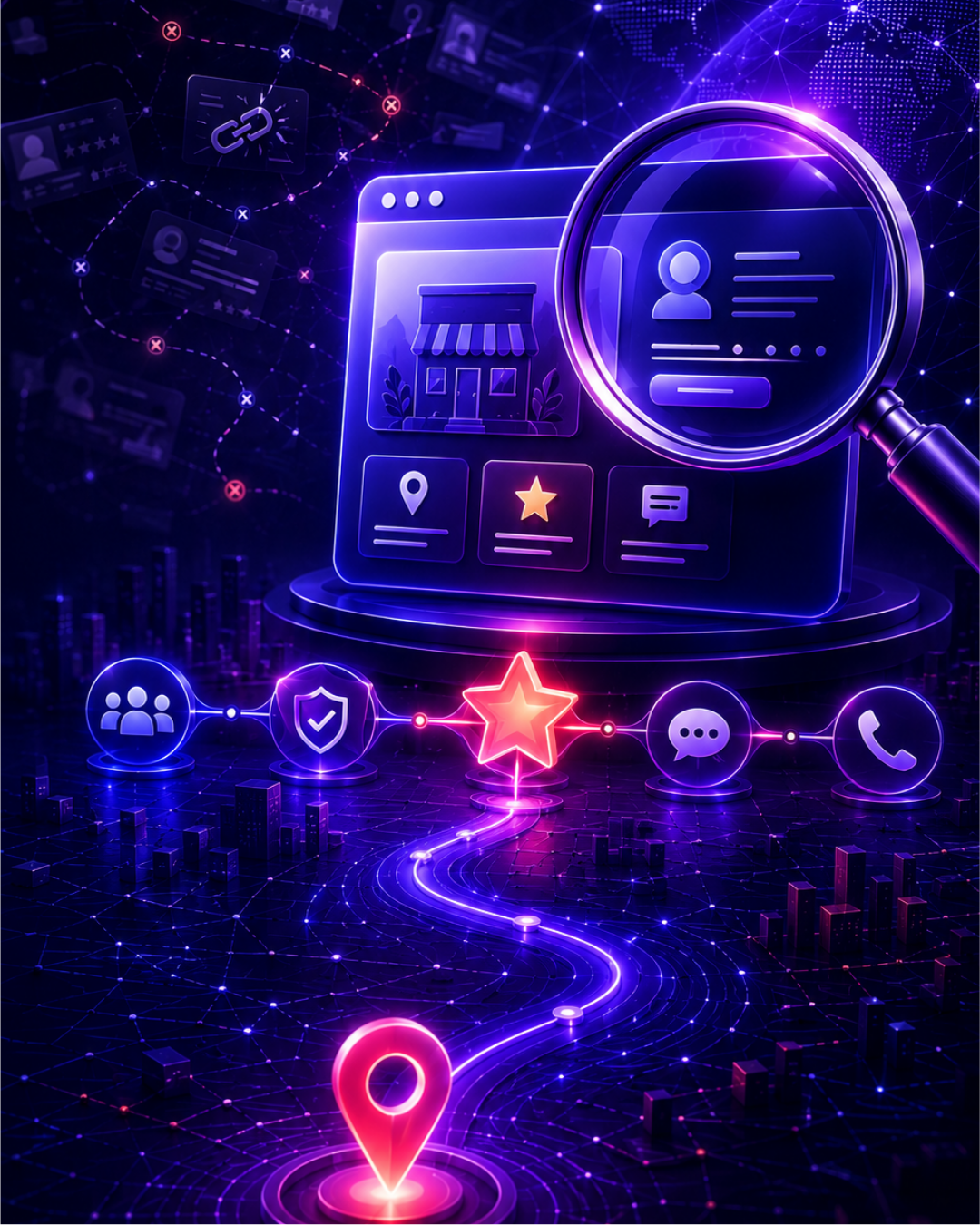
System mapping
Document how a visitor becomes a lead, appointment, client, task, or follow-up record.

CRM and booking planning
Define forms, calendars, fields, tags, pipelines, notifications, and handoffs.
Follow-up design
Clarify which communication should happen automatically and which needs a person.
Testing and management
Review implementation, test routes, identify failures, and keep corrections moving.
One Process From Problem To Evaluation
FRAME keeps the diagnosis, plan, work, ownership, implementation, and review connected without turning payment into its own public headline.
Fit-Check determines fit. Roadmap begins after the agreement and first payment.
How It Works: The FRAME Process
Most projects get messy when people start building before the work is clearly framed.

Fit-Check
Use a form and a 30-minute meeting to understand the problem, outcome, timeline, budget, and fit. Scope, agreement, and first payment are confirmed before Roadmap work begins.

Roadmap
Create a clear plan for what needs to be built, fixed, written, connected, reviewed, or managed.
Assign
Turn the Roadmap into tasks and decide who is responsible for every piece of work.
Manage
Keep the work organized, reviewed, and moving so questions, tasks, and next steps do not stall.
Evaluate
Test what was built, review what is working, and decide what should be improved or managed next.
How The Online Business Systems Engagement Moves Forward
The public flow stays simple. Fit is determined first; paid Roadmap work begins only after agreement and first payment.
Complete the service form
Share the problem, desired outcome, timeline, budget, existing work, and people involved.
Meet for 30 minutes
Use the Fit-Check to understand the problem and decide whether BPOCM can realistically help.
Agree on the scope
If both sides continue, confirm responsibilities, timeline, fees, agreement, and first payment.
Plan before building
Turn the problem into a clear plan for what should be built, fixed, written, connected, reviewed, or managed.
Give every task an owner
Assign work to BPOCM, the client team, a vendor, a platform specialist, or another contractor.
Test and decide what is next
Review what was built and identify what should be improved, adjusted, fixed, or managed next.
Scope, Investment, and Boundaries
The page does not invent a package price before the real problem and responsibilities are understood.
Pricing is based on the confirmed scope. The Fit-Check determines fit. If both sides want to continue, BPOCM prepares the scope, responsibilities, timeline, fees, and payment terms for review.
Roadmap work begins after the agreement is signed and the first payment is completed. Ongoing implementation management is priced separately when needed.
What this service is not: This is not a promise to replace every platform or automate every interaction. The work starts by understanding the current system and choosing the smallest useful set of changes.
Frequently Asked Questions
Direct answers about fit, scope, responsibilities, pricing, and what happens next.
Do I have to replace my current CRM?
No. The first job is to understand what you already use and where the actual breakdown occurs. The Roadmap may recommend keeping, connecting, simplifying, changing, or replacing a platform, but that decision is made after the system is reviewed.
Can you build the automations too?
Specific setup may be completed by BPOCM, your team, a vendor, or a platform specialist. The written scope identifies who owns each build task. BPOCM can also manage reviews and testing so the implementation remains connected to the Roadmap.
What happens during the 30-minute Fit-Check?
The Fit-Check focuses on the current online business systems problem, desired outcome, timeline, budget, existing work, and people or platforms involved. Its purpose is to decide whether BPOCM can realistically help and whether paid Roadmap work should be proposed.
Is the Fit-Check the same as the Roadmap?
No. The Fit-Check determines fit. The Roadmap is paid project work that begins only after scope is confirmed, the agreement is signed, and the first payment is completed.
Who completes the implementation work?
The Roadmap assigns each task to BPOCM, your team, a vendor, a platform specialist, or another contractor. The written scope states responsibilities before implementation begins.
How much does the work cost?
Pricing depends on the confirmed problem, scope, responsibilities, timeline, platforms, and management needs. Fees, payment terms, and any ongoing work are stated in writing before an agreement is signed.
Are results guaranteed?
No specific business result is guaranteed. BPOCM can provide the defined process, written scope, Roadmap, assigned responsibilities, implementation management, testing, and evaluation described in the agreement.
Frame the Work Before More Pieces Are Built
Start with the service-specific Fit-Check so the next decision is based on the real problem, desired outcome, timeline, budget, and fit.
Book Your Online Business Systems Fit-Check
Complete the service-specific form, then choose a date and time so the meeting can focus on the real problem, outcome, timeline, budget, and fit.
30-Minute Online Business Systems Fit-Check Meeting Calendar
30-Minute Online Business Systems Fit-Check Meeting Form